
- October 21, 2026
- Posted by: Josh Knoll
- Category: Dental Billing

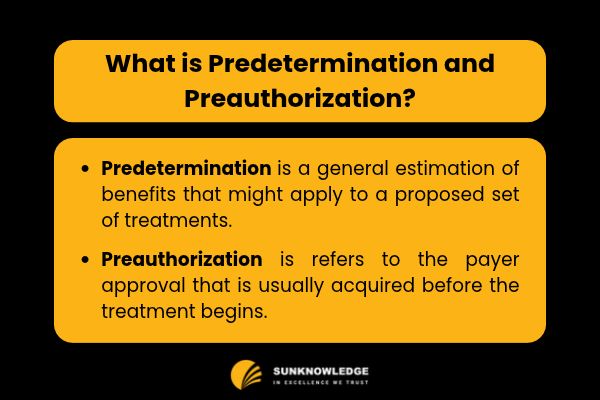
A dental practice runs well when its billing runs well. When the billing team is inexperienced, though, insurance problems pile up fast, and one of the most common is a gap between the predetermination estimate and what the insurer actually pays. Before starting major treatment, most practices send the treatment plan to the patient’s insurer for a predetermination. The insurer replies with an estimate of what it will cover, and the practice uses that number to explain costs to the patient. It’s a useful step. But an estimate is not a promise, and insurers say so in the fine print. Here’s how it plays out. The predetermination shows a patient will owe $ 300 for a crown. The work gets done, the claim goes in, and the payment comes back lower than expected. Now the patient owes more than they were told, and the front desk has to explain why. Many people assume the insurer made an error. While sometimes that’s true, but often the cause is something else, which can be quite a challenge to determine and that is where an experienced dental billing partner can help. It is no secret that the predetermination and preauthorization share somewhat a similar meaning, yet they are not interchangeable. Predetermination and preauthorization both occur before treatment; however, their purposes and requirements can differ. Predetermination is a general estimation of benefits that might apply to a proposed set of treatments. Preauthorization, on the other hand, refers to the payer approval that is usually acquired before the treatment begins. As a result, confusing these two terms can be quite a costly mistake. A practice might be under the impression that an estimate satisfies mandatory authorization rules. Later on, learning that the final claim lacks the approval that is required. This is why experts encourage practices to assess what a payer wants. Whether it is a formal approval or an estimate, chalking up to the estimated cost of service. In some cases, it can even want both of them simultaneously. This is an important distinction in dental billing as a whole. The reason is that both aforementioned workflows might seem similar, but they can serve two different administrative purposes. Therefore, understanding the difference between these two is crucial for stable dental RCM. In the simplest terms, predetermination is a pre – treatment estimate that is based on the available information during the proposal stage of the process. This set of information generally contains details such that belong to the service coverage, the plan’s allowed amount of the particular patient, deductible, coinsurance and of course the patient’s estimated share. Then again, providers need to understand that this information is useful but conditional in nature. In other words, successful predetermination does not automatically guarantee a payout. Final reimbursement can still depend on the patient’s eligibility on the date of service, the accuracy of submitted information, the treatment actually completed, and the benefit plan then in effect. A knowledgeable dental billing company therefore treats the response as an informed estimate, not as cash already committed by the payer. This distinction should also appear in the practice’s financial policy and treatment estimate. Several events can occur between the date of the estimate and the date of treatment. The patient may use benefits at another office. Coverage may terminate. A remaining annual benefit may be consumed by an emergency procedure. The employer may change the plan, or another policy may become primary. The estimate also depends on the facts originally submitted. If those facts change, the result can change too. A crown proposed for one tooth cannot safely be assumed to apply to another tooth. Similarly, a formal estimate for a specific kind of CDT code which is only used for dental billings services might not automatically transfer to a different clinical procedure; it is highly impossible. This is why dependable dental billing services tend to preserve the original response from the payer and connect that to the treatment plan that is underway. All of it without replacing the date-of-service verification. A discrepancy is any meaningful difference between the payer’s preliminary response and the final adjudication. The most visible difference is financial, such as an estimated payment of $800 followed by an actual payment of $500. However, a discrepancy can also be administrative. Examples of predetermination discrepancies include: An experienced dental billing company not only understands which differences require clarification or correction but also how to appeal. They first identify the reason for the difference. Only after that, the team decides on the next step. Most predetermination discrepancies can be traced back to a single cause or a combination of causes. The challenge arises when the final EOB only describes the adjustment, instead of tracing the chain of events that led to it. Here is a look at some of the most common predetermination triggers that are present. A predetermination often reflects the annual maximum remaining on the review date. It does not necessarily reserve that amount. If another claim is processed first, fewer benefits may remain for the rest of the proposed service. This usually happens when a patient receives treatment from a different dentist than usual. In some cases, a shared plan can also gradually diminish the benefit pool for a claim. As a result, changing the validity of the earlier estimate, which were accurate but diminishing resources. In short, the earlier estimate may no longer reflect the benefits available for the planned treatment. This is why the most experienced dental billing services generally examine the benefit ledger before they challenge the payment decision. If the benefit has been consumed legitimately, then the issue becomes one of an estimate revision and communication with the patient, instead of a payer appeal. Dental plans can be quite restrictive at times. It can affect how certain procedures receive benefits. In some cases, they can apply additional requirements such as waiting periods and age limitations, etc. Additionally, previous service dates also matter, as preventative procedures are affected by earlier service dates. Restorative procedures are restricted by the age of the procedure. Frequency is another metric that can be quite important. Some benefits are limited by frequency rules. As a result, billing teams should review these limitations, along with waiting periods, to be two of the most common reasons for holdups. This is why dental billers need to be more careful about how these metrics and details function. They must carefully assess every relevant detail in order to pinpoint any form of uncertainty that can derail the billing operation. It is often noticed that clinical findings change once the treatment goes live. Where a planned filling may become a crown. An extraction initially expected to be simple may require a surgical approach and a proposed core buildup may not be performed, or treatment may be completed on a different tooth. The final claim must clearly describe the service that was actually provided. Subsequently, the claim details must not be changed only to make it more akin to an earlier estimate. Instead, the claim must carry components such as correct codes, clinical records, and a narrative that explains relevant treatment changes that might have occurred. The mark of a correct dental billing practice is always to put clinical accuracy as a priority. Even though the earlier estimate and response might still support the case history, they cannot override the process that was conducted. A payer may cover a less costly alternative rather than the treatment selected by the dentist and patient. It may also consider one procedure inclusive of another or calculate payment from the contracted fee rather than the office’s full charge. These adjustments can be quite easy to mess up. An alternate benefit does not necessarily question the clinical appropriateness of the treatment provided. It may mean the plan calculates payment using a less expensive alternative. In a similar fashion, bundling must be reviewed clearly against the documented treatment plan, payer policy and relationship with codes. This assessment can help providers have a better sense of clarity and prevent second-hand frustration. The mark of a professionally compiled claim is that does not become cluttered but also remains detailed at the same time. Depending on the procedure, the packet may contain: Therefore, the job of the narrative is to connect the disputed decision with the actual evidence or the reasoning here. In other words, it must clearly explain the necessity of the dental procedure and the required correction. Another thing that a dental billing company checks is, of course, the consistency. A narrative describing one tooth while the image and claim identify another can weaken an otherwise valid case. Nothing shakes a patient’s trust faster than a bill that doesn’t match what they were told. If someone thinks the quoted amount is final and then gets charged more, they may feel misled, even if the practice did nothing wrong. That’s why every predetermination should be presented as an estimate from the start, not a fixed price. When the final balance does change, someone on the billing team should own the conversation. Explain what happened in plain words. Telling a patient their claim was downgraded to an alternate benefit means little to most people. Saying your plan only pays for a silver filling, so it covered part of the cost of the tooth-colored one makes sense right away. Timing matters too here. Don’t send a patient a bill while the claim still has a problem that can be fixed with the insurer. At the same time, don’t let a valid balance sit for months just because it’s higher than the original estimate. Once the claim is settled and the amount is correct, collect it. Good records always make all of this easier. Thus, you need to keep the patient’s signed financial consent along with the itemized statement, consistent account notes and a clear history of every payment and adjustment can get a clear answer. Some discrepancies will always happen. However, many others can be avoided with a few simple habits: A few tools also help keep the process consistent. And it can also start with attachment checklists and standard narrative templates to make sure every claim goes out with complete documentation and a clear clinical explanation. Also, a short weekly review comparing estimates to actual payments can catch problems before they reach the patient. Over time, a payer trend report shows patterns staff might otherwise miss. If one insurer keeps downgrading the same procedure, or tooth-number mismatches keep showing up, or claims keep coming back for missing documents, those aren’t one-off mistakes. They’re problems in the process, and they can be fixed. Practices can manage the problem better when they keep a tab on the performance measures that help them understand where they are headed. Useful indicators include: A data-focused dental billing company should report root causes, not merely the number of accounts touched. Ten phone calls do not demonstrate success if none produced a correction, clear next action, or documented contractual explanation. Predetermination follow-up draws time from scheduling, case presentation, patient service, and ordinary claim work. It can also become inconsistent when only one employee understands a payer’s portals, terminology, or appeal requirements. An experienced outsourcing partner like us can provide a defined workflow and additional payer experience, depending on its staffing and service scope. Our specialists easily manage response retrieval, date-of-service verification, claim matching, documentation requests, corrections, appeals, and follow-up deadlines without asking the front desk to abandon patients. A right partner like us further works from the dentist’s documentation and the practice’s contracts. Improving the quality of the investigation while recognizing the difference between a payer mistake and a valid plan limitation, our expert ensures seamless dental billing services for dentists across the US A predetermination discrepancy is rarely solved unless real work is involved. When this process is managed consistently, the practice gains more than a better chance of recovering payment. It also receives cleaner account notes, better patient estimates, clearer financial conversations, and useful information about recurring payer behavior. If you are someone struggling with the same, get in touch with our expert to experience a better dentistry business.What is Predetermination and Preauthorization?
What a Dental Predetermination Shows
Why the Estimate Is Not a Payment Guarantee
What Counts as a Predetermination Discrepancy?
Causes Behind Predetermination Discrepancies
Benefits Used After the Estimate
Frequency, Waiting-Period, and Age Limitations
Differences Between Proposed and Completed Treatment
Alternate Benefits, Bundling, and Fee Adjustments
Documents to Review before Correcting or Appealing a Claim
Managing the Patient’s Financial Experience
Steps in Preventing Repeat Discrepancies
Metrics a Practice Should Monitor
How Outsourcing your Dental billing services Can Help Practices