
- September 21, 2026
- Posted by: Josh Knoll
- Category: Dental Billing

It is common for a dental practice to perform two distinct procedures, report both accurately, but still receive an explanation of benefits (EOB) showing payment for only one of the procedures. In such a setting it is highly probable that the secondary line may be marked inclusive, incidental, not separately payable, or included in the allowance for another service. On the outset, this might seem like a simple coding error, but there is so much more than what meets the eye.
Effective dental billing services do not challenge every bundled line automatically. They determine whether the payer followed the current CDT descriptor, applied a contractual processing policy, enforced a plan limitation, or combined services that should have been considered separately. That investigation protects reimbursement while keeping the claim defensible.
Why CDT Code Bundling Creates Persistent Confusion
As per the American Dental Association, procedure code bundling is a systematic combination of procedures that results in a reduced patient benefit. Payers, however, may view some combinations as proper because a CDT descriptor treats one service as a component of another. Both ideas exist in the same claims environment, which is why the word “bundling” can mean different things to different parties.
The role of CDT codes is to report completed dental procedures; they do not guarantee payment in any way. Payers use this information to understand the extent of the services provided. However, a valid CDT code does not guarantee reimbursement. Payment depends on the patient’s benefit plan, coverage limitations, frequency rules, exclusions, processing policies, and any applicable participating-provider agreement. The practice must therefore avoid treating coding and coverage as though they are the same decision.
A knowledgeable dental billing company first examines what happened to the submitted code. Was it denied, changed, combined, limited, or paid at zero? That small distinction shapes the next action. Corrected claims address submission errors, while appeals contest adjudication. Sending a corrected claim when the payer has actually applied a policy edit may only produce the same result again.
Proper inclusion versus improper bundling
Some component services should not be billed separately. Example of this might include a routine suture removal reported apart from an extraction. Hence, reporting such components separately may constitute unbundling rather than a valid request for additional reimbursement.
Improper bundling is different. It may occur when the clinical record supports two distinct procedures, the current code descriptions do not make one service inclusive of the other, and the payer nevertheless absorbs one line without a clear contractual or benefit basis. The fact that two services were performed on the same tooth or date does not automatically mean that one is included in the other.
This is where dental billing services add value. The reviewer compares the exact procedure performed with the current descriptor rather than relying on an old code list or general memory. CDT is updated annually, so a combination that was handled one way in an earlier year may require a different analysis after a code is revised, added, or deleted.
Bundling is not always downcoding
Bundling, downcoding, alternate benefits, noncoverage, and frequency limitations are often discussed together, but they are not interchangeable. Bundling absorbs one service into another. Downcoding changes the benefit calculation to a less complex or lower-cost procedure. An alternate-benefit policy pays according to a less expensive treatment option, while a frequency limitation restricts how often a benefit is available.
An appeal becomes weaker when it challenges the wrong issue. If a posterior composite has been paid at an amalgam allowance, arguing that two distinct services were improperly combined misses the payer’s actual decision. The EOB language, benefit plan, provider manual, and payer call reference should all point to the same classification before an appeal is written.
Where Improper Bundling Commonly Appears
One of the most common pain points in this aspect includes radiographs. The reason is the overall complexity of the process. This is why components such as the diagnostic purpose, image type, patient presentation, plan policy, etc. might not align in a neat fashion. Also, the American Dental Association identifies radiographic combinations as a frequent source of concern, while audit findings show that imaging also produces substantial documentation and coding errors on the provider side.
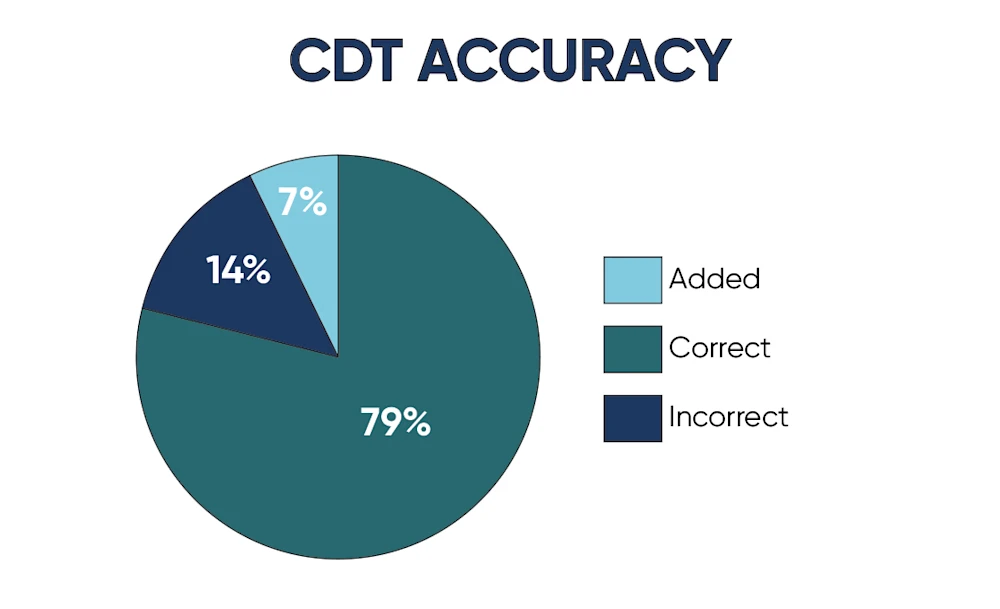
That second point matters. A practice should not assume the payer is wrong simply because reimbursement is lower. In an AAPC audit of 2,600 claims from 10 health centers, CDT accuracy was reported at 79%, with incorrect coding associated with insufficient documentation, unbundling, and overcoding. Radiologic images accounted for a notable share of identified errors.
Restorative services create another difficult area. Separate restorations on different surfaces, pulp caps, buildups, crowns, and adjunctive procedures may trigger automated edits. A payer might combine two restorations on the same tooth into a larger restoration benefit or treat a buildup as part of crown preparation. The appeal must explain not merely that both codes exist, but why each reported service met its own clinical definition.
Well-organized dental billing services maintain a matrix of recurring code combinations, and the documents normally required for each payer. That matrix should guide claim preparation, not replace professional coding judgment. A payer’s historic behavior is useful operational information, but the service performed and the current CDT language remain the starting points.
How a Bundled Claim Should Be Investigated
A bundled claim should move into a review queue before anyone posts the unpaid amount as a contractual adjustment. Once the account is closed and the adjustment accepted, the revenue loss becomes much harder to notice. The reviewer should preserve the original claim, EOB, electronic remittance details, attachments, notes, and payer correspondence. In fact, billers can effectively create a review built on six questions regarding bundling:
- First, were both procedures actually performed? The chart should support the date, site, tooth, surface, diagnosis, clinical findings, and work completed. If the record does not support a line, additional payment should not be pursued.
- Second, does the current CDT descriptor make one procedure inclusive? The team must consult the code set for the applicable year of service. Old cheat sheets are not reliable enough for an appeal.
- Third, did the payer change the code or merely change the benefit? The claim history and EOB should show whether the original code remained on the adjudicated claim.
- Fourth, what policy triggered the adjustment? The payer should be asked for the relevant processing guideline, provider-manual section, frequency rule, or plan provision. The American Dental Association indicates that processing policies may appear in provider manuals or payer portals rather than in the main agreement.
- Fifth, does the clinical evidence overcome the edit? Separate necessity may be demonstrated through diagnostic findings, images, periodontal measurements, missing tooth structure, operative detail, or another case-specific fact.
- Sixth, does the contract restrict patient billing? The practice should never transfer a balance to the patient simply because the payer did not issue a separate benefit. Participation agreements and EOB instructions may require a write-off or prohibit additional collection.
A capable dental billing company records the answer to every question before choosing an action. The result may be an appeal, corrected claim, payer inquiry, patient-benefit explanation, contractual adjustment, or internal coding education. Not every review ends with more payment, but every review should end with a documented reason.
Building a Defensible Appeal
An effective appeal is a short, organized argument supported by specific evidence. It should identify the patient, claim number, date of service, tooth or quadrant, disputed procedure, payer action, requested resolution, and filing deadline. It should then explain why the service was distinct under the clinical circumstances.
The appeal packet may include the original claim, EOB, relevant clinical notes, diagnostic images, periodontal charting, photographs, laboratory information, treatment plan, previous payer correspondence, and the applicable policy language. Submitting a large chart without directing the reviewer to the decisive facts is rarely helpful.
What the clinical narrative must establish
The narrative should answer three questions as follows:
- Why was each procedure clinically necessary?
- How was each procedure separately performed?
- Why does the reported code accurately describe the documented work?
For example, a core buildup appeal should explain the extent of missing tooth structure and why the buildup was required for retention rather than being routine crown preparation. A radiographic appeal should identify the diagnostic purpose and explain why the images did not constitute the series applied by the payer. A restoration appeal should distinguish locations, surfaces, or clinical conditions without exaggerating them.
The best dental billing company translate chart evidence into a concise payer-facing narrative without inventing details. If the clinical note is incomplete, a billing team may ask the treating dentist for clarification, but it should not alter or backdate the record. Late entries, when permitted, must be identified transparently and follow the practice’s documentation policy.
The appeal should cite the payer’s own reason for bundling. A generic statement such as “the procedure was medically necessary” is not enough when the actual dispute concerns whether the service was included in another code. The writer must respond to the rule that caused the reduction.
What should not be included
An appeal should not accuse the payer of fraud, copy a generic narrative that does not match the patient, or demand payment merely because the practice charged a separate fee. Listing separate fees in the practice-management system does not establish that the procedures are separately reimbursable.
The team must also resist unbundling. If an inclusive code accurately represents the service, fragmenting that service into several codes to bypass an edit creates compliance risk. Furthermore, repeated unsupported appeals consume staff time and can draw unwanted scrutiny.
The first level of appeal must be submitted through the payer’s required channel and within the predetermined deadline. The billing team must make an effort to retain details such as proof of submission, portal confirmation, fax record, or certified mail receipts.
If the first-level appeal is unsuccessful, the billing team should review the payer’s response, identify the unresolved issue, confirm the next-level appeal requirements, and submit additional or more targeted evidence when appropriate. The second level of the process must touch upon missed details or provide evidence of weak appeal. This creates a system that helps providers to appeal effectively.
Learn More:
Top Dental Billing Strategies to Reduce Outstanding Patient Balances
How Billing Support Strengthens the Workflow
Bundling management is not only an appeal function. It starts with benefit verification and continues through final account resolution. Experienced dental billing services create payer profiles containing portal instructions, attachment preferences, known frequency rules, provider-manual links, appeal levels, addresses, deadlines, and call records.
At claim creation, the billing team checks whether the clinical note supports every reported code. Tooth numbers, surfaces, quadrants, dates, narratives, and attachments should match one another. Current code files should be installed in the practice-management system, and deleted codes should be removed from favorites and templates.
After adjudication, the payment-posting team compares paid and unpaid lines with the submitted claim. Adjustments marked inclusive, incidental, not separately payable, or provider responsibility should enter a review work queue. This simple control keeps a questionable reduction from being posted and forgotten.
Next comes follow-up. Each account should have an owner, next-action date, dollar amount, filing limit, and appeal stage. Calls should record the representative’s name, reference number, policy explanation, and promised action. Vague notes such as “called insurance” do not support escalation.
Finally, reporting connects individual cases. A dental billing company can group bundled claims by payer, code pair, provider, location, dollar value, and appeal outcome. If one payer repeatedly bundles the same services, the practice can improve upfront documentation or seek formal policy clarification. If one location experiences the issue across many payers, the greater problem may be internal.
Choosing the Right Billing Partner
A practice evaluating a billing partner should ask how the organization distinguishes improper bundling from legitimate inclusive coding. If the answer is simply that every unpaid code will be appealed, the process may create additional work without improving compliance or collections.
Qualified dental billing services like SunKnowledge can describe their CDT-update process, documentation review, payer-profile maintenance, payment-posting controls, appeal tracking, quality audits, privacy safeguards, and performance reporting. On top of that, we can also explain how clinical questions are returned to the dentist rather than answered by billing staff without adequate information.
A dependable dental billing company like ours sees trust as the paramount currency in the trade, therefore we set realistic expectations that are backed with 15+ years of expertise and a flat fee pricing rate that does not burn a hole in the pocket.