
- November 12, 2025
- Posted by: Josh Knoll
- Category: DME Billing
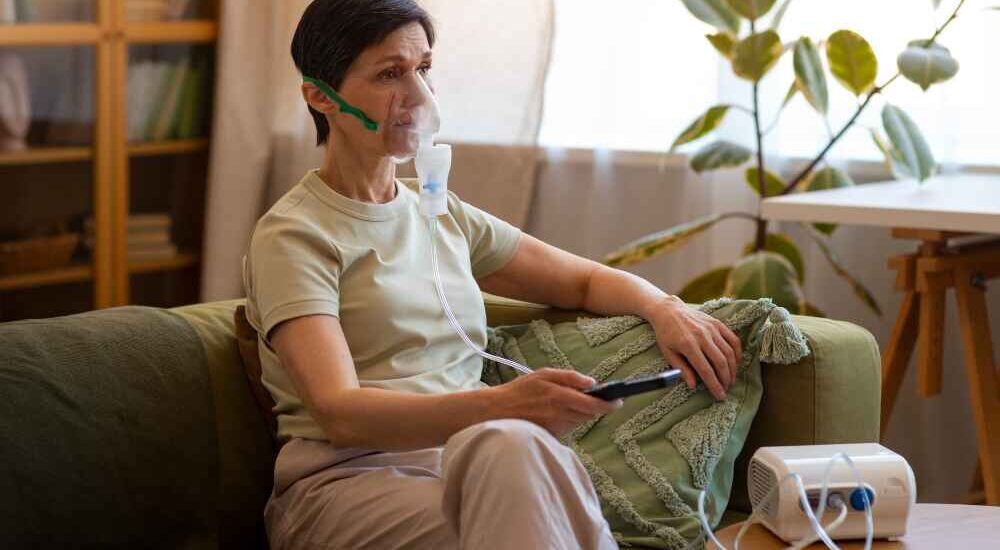
Running a DME business is tough, especially when it comes to CPAP and BiPAP billing. There are many rules to follow, and you need extensive documentation. Insurance companies also ask for proof at every step. If you work with sleep therapy machines like CPAP and BiPAP, you already know how tricky DME billing can be. Understanding these rules can simplify your billing process. You can actually avoid mistakes and get paid on time by knowing about the refills, replacements and compliance rules.
Learn about the basics of CPAP and BiPAP devices:
We all know that CPAP and BiPAP machines help your patients with breathing issues or those suffering from sleep apnea. These devices use air to push into the lungs and keep the airway open and come with parts like masks, tubes, filters, humidifiers and cushions. You need to know that all these items are invoiced under DMEPOS (Durable Medical Equipment and Supplies), where each part has its unique code and billing guidelines. You cannot afford to miss any such rule.
Related Reading: Earn A Competitive Edge in DME Billing with Clean Front End
Know why insurance payers have tightened their regulations regarding DME supplies:
You also need to follow stringent insurance rules on how often you can bill for them. The reason is simple as there were some instances where a major DME manufacturer had engaged in fraudulent activity. Philips RS North America, once called Respironics Inc., had to pay over $24 million for breaking the rules. Wondering why? The company was accused of giving kickbacks to DME suppliers and misleading Medicare, Medicaid, and TRICARE, the health program for military families. You need to be very careful when it comes to following insurance payer rules for DME supplies.
Here are some common examples- a CPAP machine has the code E0601, a BiPAP has E0470 or E0471, masks have A7034 or A7030, tubing has A7037, filters have A7038 or A7039, and headgear has A7035. Each item has its respective refill and replacement time based on the insurance payer.
Unfortunately, you cannot expect to enjoy a seamless billing experience when CPAP and BiPAP devices are concerned. The following are the reasons why billing for CPAP and BiPAP is a complex affair-
- Stringent documentation requirements
- Time-based devices supply requirements
- Solid proof of medical necessity
- Proper tracking of patient compliance and 3Medicare and commercial payers always expect the following proof from your end
Medical necessity – You must show that the equipment is prescribed for a real medical reason (like sleep apnea), supported by a sleep study and a doctor’s order.
Proper usage – Insurance payers always need proof that the patient is actually using the machine as prescribed (for Medicare, at least 4 hours per night on 70% of nights in the first 90 days).
No overuse or overbilling – Payers check refill dates and usage data to ensure suppliers aren’t sending unnecessary supplies or billing too often.
Fortunately, you can actually avoid claim denials and payment loss by implementing the steps mentioned below-
Vital steps to follow to avoid claim denials in DME billing for CPAP and BiPAP devices:
Establish medical necessity methodically:
The first rule in DME billing is to show medical necessity. Before you bill for a CPAP or BiPAP machine, you must have all the right papers. This includes a sleep study that proves the patient has sleep apnea, a doctor’s prescription, and a face-to-face visit done within six months before ordering the device. You cannot forget the fact that this visit is a mandatory for Medicare or else, you will be facing claim denials. You need to ensure that the prescription clearly includes what type of machine is needed, the pressure settings, what accessories are required, and how often it will be used.
Verify insurance coverage and perform prior and reauthorization:
Before giving the machine to the patient, you must check their insurance coverage. Different insurance companies have different rules for CPAP and BiPAP devices. Medicare always treats CPAP (E0601) and BiPAP (E0470 or E0471) as rental items where the tenure lasts 13 months, and after that, the machine belongs to the patient. Private insurance plans may have their own timelines. Sometimes, you need prior authorization before delivering the machine. This means you must send the doctor’s notes, the sleep study, and the order to the insurance company for approval. Reauthorization may also be needed later to keep payments going, especially if the insurance wants proof that the patient is still using the machine correctly. Without prior or reauthorization approval, you might not get paid for the claim.
Document patient setup and delivery:
After you get the authorization, you can deliver the device to the patient. But just giving it is not enough. You must have Proof of Delivery, also called POD. This paper should have the patient’s name, address, details of each item, HCPCS codes, quantity, delivery date, and the patient or caregiver’s signature. If you send the device by mail, you need a tracking record that shows when it was delivered. Medicare may request this proof, and payments can be recouped if missing.
Carefully track patient compliance:
A lot of DME suppliers feel tracking patient compliance to be a troublesome job. Insurance companies want to see that the patient is using the machine the right way. For Medicare, the patient must use it at least 4 hours each night, on 70% of nights, during the first 90 days. You need proof of this, which usually comes from the machine’s data or smart card. Medicare will stop paying after the trial period and If the patient does not use the machine enough. Your patient will again need a new check-up and sleep study to qualify again. It is important to keep track of usage and remind patients to follow their therapy properly.
Understand the refill and replacement rules:
It is obvious that refuel and replacements are not the same as refills are for small parts that your patients often require. Your patients need renew for masks, filters or tubing. Insurance payers have strict rules on how frequently you should bill for them. You can give a mask every 3 months, cushions twice a month, tubing every 3 months, disposable filters twice a month, non-disposable filters every 6 months, headgear, chinstraps, and humidifier chambers every 6 months. You must ensure that the patient still needs the item before billing a refill and also, the patient agreed to the refill. You also have to write down when and how the patient asked for it. You cannot send fill-up automatically without their approval. Replacements are different. They are for big items like the CPAP or BiPAP machine when it is lost, stolen, or broken beyond repair. You can also replace it if it has been used for 5 years or if the patient’s health condition has changed. For replacements, you need a new order from the doctor and a note saying why the old machine can’t be used. If it’s a lifetime replacement, you must also have a new medical necessity form before sending the bill.
Stay on top of the compliance rules:
Billing for CPAP and BiPAP has many rules that you must follow. You have to follow both Medicare and insurance company rules. All DME suppliers must be properly approved and have the right numbers and a real office for audits. You also have to keep all papers, like prescriptions, delivery notes, and refill records, for at least seven years. Medicare does not allow automatic fill, so the patient must confirm each refill before you send it. You must also show that the patient is still using the machine. This proof can come from the machine’s usage report or the doctor’s notes. If there is no proof, the insurance can stop payments or ask for money back. Every form and delivery slip must also have a clear signature and date, or it will not count during an audit.
Now, you might have realized how difficult it is to stay on top of the entire payer rules for invoicing CPAP, BiPAP and other durable equipment, especially, when you are running without an experienced team. CPAP and BiPAP also comes under sllep billing services sometime and may create confusion. A single mistake in your billing process can always lead your practice to face claim denials and payment loss. Fortunately, you can still streamline a perfect revenue cycle management by a reliable and experienced DME billing company like SunKnowledge.
Related Reading: How to Protect Your DME Billing from Rising Frauds
SunKnowledge: The ideal DME billing partner to vouch for
SunKnowledge has been helping DME suppliers with CPAP billing for almost 20 years. We have worked with over 100 DME clients and made sure they are happy with our services. Our team ensures fast, accurate, and cost-effective billing to maintain a 97% first-pass collection rate and over 99% accuracy in all DME claims. Our services start at just $7 per hour, helping suppliers cut billing costs by up to 70%–80%. With such a strong record, we are among the best DME billing companies in the US. Fill out the quick connect form to see how we make DME billing simple and help you get paid on time.