
- May 20, 2026
- Posted by: Josh Knoll
- Category: Virtual Assistants

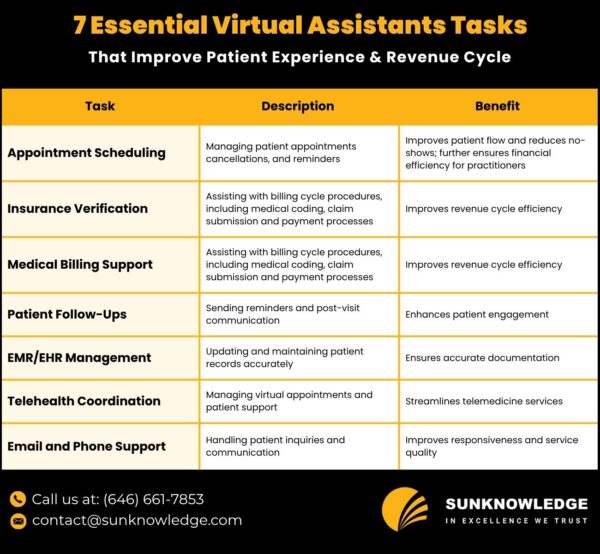
As the healthcare industry evolves, the administrative duties of practitioners continue to rise rapidly, along with patient demands. Starting from managing patient appointments, registering new patients and verifying their insurance coverage, to medical billing and following up with Payers over reimbursements – administrative tasks are taking away significant hours from physicians’ time. As per industry data, physicians spend an average of 8.7 hours per week (16.6% of working hours) on administrative tasks. Attending to non-clinical tasks for such a long duration hinders patient care. This is why modern healthcare practices and providers are increasingly outsourcing such chores to healthcare virtual assistant services. It improves their operational efficiency, reduces costs and enhances patient care. Simply put, it has become a smart operational decision for healthcare practitioners looking to stay competitive and patient focused. The term medical virtual assistant (VA) is used to describe remote administrative and assistive services that help healthcare facilities run smoothly and with better efficiency. These services are provided by specially trained human agents who remotely assist clinics, hospitals, physicians and other medical facilities in managing their practices and in performing many back-office tasks – through secure communication. Common tasks handled by Medical Virtual Assistants include: Outsourced virtual assistant services essentially streamline operations by handling administrative and non-clinical tasks on behalf of the provider. Some of the biggest benefits include: One of the biggest challenges healthcare practitioners face today is the significant amount of administrative work. Starting from managing patient records to handling insurance paperwork and even following up with Payers, practitioners are expected to wear many hats. The smallest errors in billing and coding can lead to financial loss. But catering to such administrative tasks evenly can hinder patient care as it requires a massive time commitment. Virtual assistants effectively help reduce such burden by deftly handling administrative tasks, allowing practices to focus more on providing quality care. Expert healthcare virtual assistance providers are experts in not only administrative tasks but are also aware of changing medical regulations and norms. Simply put, they are well versed in medical terminologies, billing cycle procedures, Electronic Health Records/Electronic Medical Record systems, and HIPAA guidelines. While having an adequately staffed administration team in-house can get costly – given the need for training, equipment and other associated expenses – outsourcing can bring about massive savings. Simply put, outsourced healthcare virtual assistant services help practitioners lower their operational costs without compromising on the quality of work. Healthcare demands can shift frequently. Outsourced virtual assistant services provide the flexibility to scale their support as needed by the present situation. They have the technology and human resources in place to adjust quickly to the changing requirements of healthcare clients. Ensuring a good experience for patients is at the heart of all medical practices and providers alike. Medical virtual assistants help ensure it. They eradicate chances of delayed responses, long wait times and scheduling issues, leading to high levels of patient satisfaction. Let us now have a look at some of the common tasks managed by VAs. If you are looking to hire medical virtual assistants, then consider watching out for the following warning signs: We at SunKnowledge understand the value of your time and hate to see it getting spent on non-clinical tasks; and we reflect this through our thoughtful services. In our 17+ years of experience in the medical RCM domain, we have excelled in ensuring client satisfaction in all our services, and our medical virtual assistant services are no different. Here is the list of administrative duties that our healthcare virtual assistants perform: Outsourcing healthcare management tasks comes with some natural concerns about compliance and data security. It is comforting to know that we are 100% HIPAA compliant and have adequate data privacy strategies in place, such as: If you are looking for virtual scribe services, we offer that too. We have implemented AI-powered, ambient listening technology for real-time documentation. Through this, you no longer need to worry about creating clinical notes which is completed within minutes by our expert assistants. For voice-based processes, we ensure the best experience for your patients by employing voice agents with a neutral US accent, coupled with active noise reduction technology. Our services are available at $7 per hour and they are known to reduce your in-house operational costs by 80%. If your goal is to improve operational efficiency, save cost and enhance patient care, consider outsourcing your administrative workload to us. Consult our experts today to see how we can make a difference in your operations, and get your first 30 days free, with no binding contracts afterwards.What Is a Medical Virtual Assistant and How Do They Help?
5 Ways Healthcare Virtual Assistants Help Reduce Burnout and Save Time
1) Reduced administrative burden:
2) Access to skilled professionals:
3) Cost savings:
4) Scalability:
5) Increased patient satisfaction:
Behind-the-Scenes Tasks Managed by Medical Virtual Assistants
Red Flags to Avoid While Hiring Virtual Assistants in Healthcare
Why is SunKnowledge the Best Healthcare Virtual Assistant Services Provider?