
- May 1, 2026
- Posted by: Josh Knoll
- Category: HME Billing
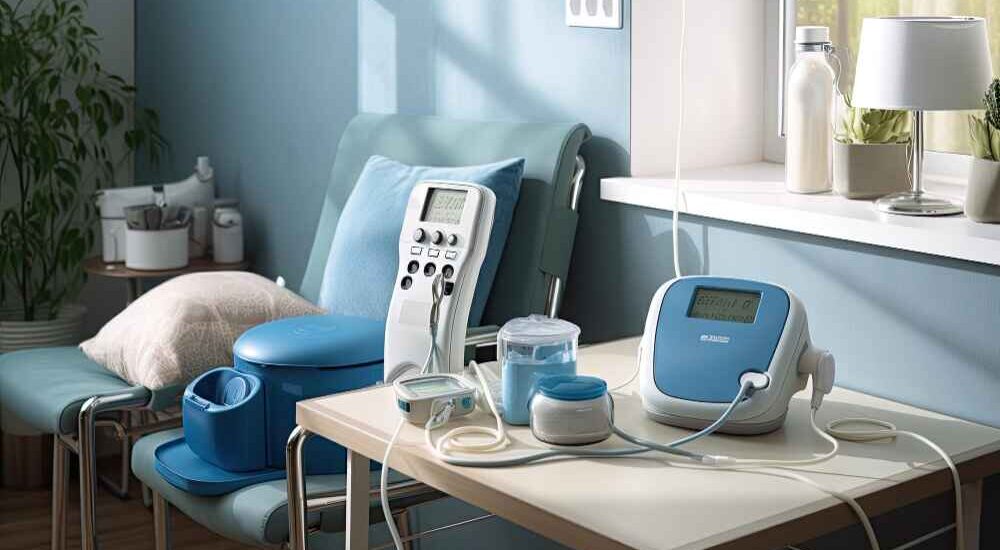
Suppose as a HME provider you have delivered a CPAP machine to a patient suffering with sleep apnea and are expecting payment. The CPAP machine was a new one. However, while submitting the claim for it, you forget to assign the relevant modifier “NU” (signifying that the equipment was a new, unused one). Do you think your claim will be accepted?
The answer is, no!
Given you have failed to provide the necessary context for effective billing, your claim will be rejected by the payer. However, the more interesting thing is that in terms of home equipment billing, these types of modifiers need to be stacked to communicate the status of the equipment delivered to patients. Basically, modifiers help provide sufficient context to the billing scenario.
However, navigating such complex nuances can be quite complex and this is why expert HME billing services play a vital role. These professionals have in-depth understanding and expertise in submitting accurate HME claims which are correctly coded using modifiers. This helps in ensuring effective revenue cycle management for providers like you.
What Is Modifier Stacking in HME Billing?
If you strip billing for HME down to its core, every claim tells a story; and modifiers are the fine print that makes that story believable to the payer.
A modifier is a short two-character code added to a CPT or HCPCS code to explain how, why, or under what conditions a service or item was provided. It does not change the service itself; it adds context.
Now here is where HME gets tricky.
In most medical billing scenarios, you might use one modifier, or maybe two. But in HME billing, it is common to use multiple modifiers together on a single line item. That is what we call modifier stacking.
For example, billing a wheelchair might require:
- A modifier indicating rental vs. purchase
- Another for medical necessity
- Another for billing cycle stage
Related Reading: A Reliable HME Billing Extension for Reduced Operational Costs
Why Modifier Combinations Matter More Than You Think
Modifiers in home medical equipment billing are not simply optional add-ons; they help provide sufficient context to the equipment scenario. They help payers decide on reimbursement rates. For example, it helps payers get answers to critical questions like “Is the item covered?”, “What is the status of the item? Is it new or used?” or “Is the item delivered under the rental model or is it purchased?” Simply put, incorrect modifier usage can lead to reduced payment for providers.
Additionally, if the modifiers used do not match the medical documentation provided, it triggers audits. For example, you have provided a CPAP machine to a patient and used the KX modifier to establish the medical necessity of the equipment for the patient. However, the clinical documentation provided failed to justify the same. In such a case, the claim will be denied.
Common HME Modifiers and What They Signal
When it comes to billing for HME products, modifiers do not sit as simple codes that are appended to the HCPCS or CPT codes. They are more like signals answering specific questions. Some of the most frequently used modifier types along with some examples are listed below:
| Modifier Type | What It Signals to the Payer | Common Modifiers |
|---|---|---|
| Purchase vs. Rental | Whether the equipment is being rented monthly or purchased outright | RR (Rental), NU (New Purchase), UE (Used Equipment) |
| Medical Necessity | Confirms that the item is medically required | KX |
| Equipment Condition / Status | Describes the condition or lifecycle stage of the equipment | UE (Used), RA (Replacement), RB (Repair/Part Replacement) |
| Capped Rental / Billing Stage | Identifies which month or phase of a capped rental cycle the claim falls under | Often used with RR + payer-specific tracking rules |
| Liability and Patient Responsibility | Indicates whether the patient was informed about non-coverage and financial responsibility | GA, GY, GZ |
| Informational Modifiers | Provide extra context but may not directly impact payment | EY (No physician order), KX (also informational in some contexts) |
| Repair and Maintenance | Clarifies whether billing is for fixing existing equipment rather than providing new equipment | RB |
The Hidden Rules Behind Modifier Stacking
Even if you stack modifiers while billing, if you fail to abide by these below mentioned rules, your claim is most likely to be denied.
Ensuring correct order while stacking modifiers is absolutely important. This happens because payers interpret modifiers in sequence. The correct sequence goes like first pricing, then payment and last location.
It is also critical to understand that different payers have different rules when it comes to modifier usage. For example, Medicare requires providers to use the modifier “KX” to justify medical necessity. But other commercial payers may not consider this.
Documentation must match every modifier used.
Top Reasons HME Claims Fail Due to Modifiers
HME claim denials happen due to mostly small errors. For example, if there are any missing modifiers, it will lead to instant rejection of claims as it will not provide the right context. Secondly, it is important to know some modifiers cannot simply be used together. For example, “NU” (new equipment purchase) and “UE” (used equipment) cannot be used together. This is because NU tells the payer the item is brand new while UE signals it is used equipment; so, stacking them creates a direct conflict.
Additionally, documentation mismatch with the modifier used causes denials. For example, if the modifier “KX” is used but the documentation fails to justify the medical necessity, the claim is most likely to be rejected. For all these reasons, hiring an expert HME billing company is necessary.
Related Reading: HME Billing Traps: What Payers Don’t Tell You
Streamline Your HME Billing with the Right Partner: SunKnowledge
When it comes to hiring a billing partner, there is often no better choice than outsourcing to a dedicated partner. We at SunKnowledge ensure you get the best results for the price you pay.
To begin, our experts have the perfect understanding of different client-specific home medical equipment billing software like Brightree, NikoHealth, among others. Secondly, our RCM professionals have the dedication and expertise to manage large volumes of bill management as per client demand. Lastly, our certified coders ensure 99% coding accuracy and 97% first pass claim collection rate which indicate our complete familiarity with HME modifier usage.
Furthermore, it is worth noting that we provide all our services at $7 per hour, which makes us the most cost-effective RCM solution provider in the industry.
If you are struggling with modifier stacking in HME billing, there is no better choice for a HME billing partner than us.
Schedule a free consultation with us today.