
- August 17, 2026
- Posted by: Josh Knoll
- Category: Skilled Nursing Facility Billing
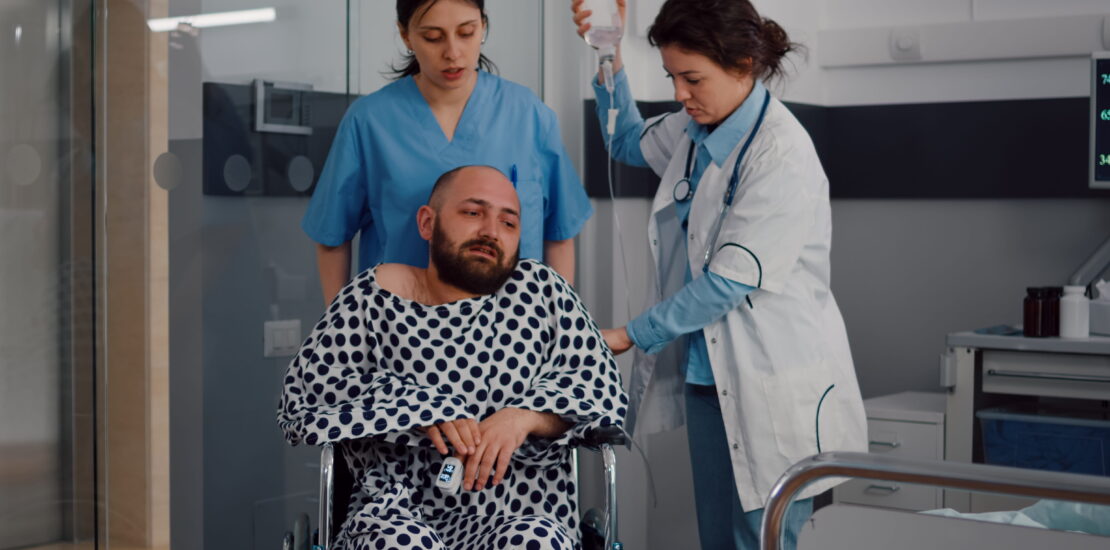
CPT 99306 is used for an initial nursing facility visit that involves high medical decision making. This E/M code is about how clearly the provider documents all the required MDM elements and not about how complex the patient’s condition appears to be.
Misaligning this code can be a problem, as even a detailed clinical note may not support CPT 99306 if it lacks the information a payer needs to verify the level of service. This is because high MDM has specific, defined components where complete transparency is needed for the payer to see its necessity.
What CPT 99306 Covers in Initial Nursing Facility Care
CPT 99306 describes initial nursing facility care billed per day for the evaluation and management of a patient at the time of admission. It belongs to the initial nursing facility care family (99304 – 99306); subsequent visits during the same stay are generally reported using 99307 – 99310, subject to Medicare and payer-specific rules on who may perform and bill each visit type.
Two things qualify a visit for 99306:
- a medically appropriate history or exam combined with either high MDM
- a provider code by time, which has to be at least 50 minutes spent on the date of the encounter
Difference among CPT 99304 vs. 99305 vs. 99306
| CPT Code | MDM Level | Time Threshold |
|---|---|---|
| 99304 | Straightforward or low | 25 minutes |
| 99305 | Moderate | 35 minutes |
| 99306 | High | 50 minutes |
How is code CPT 99306 selected during Skilled Nursing Facility billing: MDM or Time ?
From the last three years E/M overhaul, nursing facility visit codes are selected the same way office visits and hospital inpatient codes generally are. It is done either by the level of medical decision-making or by total time on the date of the encounter. While the history and exam still need to be medically appropriate, they no longer determine the code level on their own.
However, most 99306 claims are supported through MDM rather than time, since a genuinely complex new admission tends to justify high MDM on clinical grounds. Time-based coding is the fallback when a visit runs long but doesn’t independently meet the high-MDM criteria.
Medicare note on prolonged services: When 99306 is selected using time, Medicare’s add-on code for prolonged nursing facility E/M service which is G0317, not CPT 99417 or 99418. As Per CMS’s Evaluation and Management Services MLN booklet, G0317 applies once total qualifying time for 99306 reaches 95 minutes, counted across the day before the visit, the date of the visit, and three days after. That’s a separate, much higher threshold than the base 50-minute requirement for 99306 itself, and the two shouldn’t be confused.
What Qualifies as High Medical Decision Making in an SNF visit?
Understanding high medical decision making (MDM) is important when CPT code 99306 in skilled nursing facility billing is involved. High MDM is based on three main elements and to support high MDM, at least two of these three elements must meet the high-level requirements.
1. Problems Addressed During the Visit
The first element looks at the number and complexity of medical problems the provider actively evaluates or manages. High-level problems may include a serious chronic condition that has significantly worsened or an acute or chronic condition that threatens the patient’s life or bodily function.
Here, the initial nursing facility care can deal with patients having multiple health conditions that may require intensive management. These patients might further need frequent medication changes, treatment adjustments, or repeated evaluations not only because their condition could worsen but also, at times, it can lead to hospital readmission.
For Skilled Nursing Facility Billing, simply listing several diagnoses is not enough. The documentation should explain which conditions were addressed and why they required significant medical management.
2. Risk of Patient Management
The second element focuses on the risk associated with the provider’s treatment and management decisions. Examples of high risk can include drug therapy that requires intensive monitoring for toxicity, a decision regarding hospitalization, or certain decisions involving major surgery and identified risk factors.
Routine prescription drug management does not automatically qualify as high risk. For example, adjusting a blood pressure medication or managing a routine insulin dose may fall under moderate risk depending on the circumstances. The medical record must show why the management decision meets the high-risk criteria.
3. Data Reviewed and Analyzed
The third element considers the medical information the provider reviews and analyzes while making treatment decisions. This can include medical records, diagnostic tests, information from an independent historian, independent interpretation of certain tests, or discussions with another physician or qualified healthcare professional.
For high MDM, the extensive data requirement generally involves meeting criteria from at least two applicable data categories. In short, managing skilled nursing facility patients means dealing with complex care issues. But multiple diagnoses or complex care do not automatically support CPT 99306. When CPT 99306 is selected based on MDM, the documentation must support high-level MDM in at least two of the three elements: problems, risk and data.
This is why accurate documentation plays such an important role in skilled nursing facility billing services.
Read More:
How to Manage Consolidated Billing and PDPM in Skilled Nursing Facility Billing
Case Study: Coding during CVA Admission with CPT 99306 on Initial Nursing Facility Care
A 72-year-old patient was admitted to a skilled nursing center for rehabilitation and continued medical care. It is done immediately following discharge from an acute care hospital after a cerebrovascular accident. The SNF medical director documents a medically appropriate history and examination, orders a multidisciplinary rehabilitation care plan, and continues managing the patient’s hypertension and diabetes. The scenario thus states that the MDM level is high.
In this case, the medical decision making (MDM) is stated as high, which points to CPT 99306. And in the real world of Skilled Nursing Facility billing, the documentation must clearly support that high MDM level. Here is what a professional biller or coder needs to do:
1) Problems Addressed
This is the strongest part of the case as the patient has a recent stroke along with hypertension and diabetes that require active management during rehabilitation. With the multiple medical conditions, which may be denoted as a high level and undoubtedly require intensive management, frequent treatment changes, or close evaluation because of the patient’s condition. As either the patient’s condition could worsen or lead to hospital readmission. Thus, the medical record should clearly explain how these conditions are being managed rather than simply listing the diagnoses.
2) Data Reviewed
A patient transferred from an acute care hospital may arrive with a discharge summary, imaging results, laboratory reports, and other records. Reviewing this information can contribute to the MDM data element. However, it should not be assumed.
For accurate Skilled Nursing Facility Billing, the provider should document which records, tests, or other information were reviewed and analyzed during the encounter.
3) Risk of Patient Management
The patient’s stroke, hypertension, and diabetes may require medication and ongoing monitoring. However, routine medication management does not automatically qualify as high risk.
High risk may apply when the treatment involves factors such as drug therapy requiring intensive monitoring for toxicity or a decision regarding hospitalization. The documentation should clearly show why the patient’s management carries a high level of risk.
What Does This Mean for CPT 99306?
In this scenario, CPT 99306 is the appropriate code because high MDM is specifically given as part of the case. In an actual SNF claim, however, a stroke diagnosis or multiple medical conditions alone would not automatically support CPT 99306.
In fact, the medical record must show the provider’s clinical decisions and support the required MDM level. This is where accurate documentation and an experienced SNF billing company become important for preventing coding errors and avoidable claim issues.
Documentation Checklist for a CPT 99306 High MDM Claim
The case study shows why clear documentation matters in SNF billing. A patient’s medical problems may be well documented, but important details about data reviewed and treatment risk can sometimes be missed.
Thus, before submitting a CPT 99306 claim based on high MDM, review each MDM element separately. Check the problems addressed, data reviewed and analyzed, and risk of patient management. Also, professional billers always check information like:
- A medically appropriate history and exam for the admission
- The active conditions described with enough specificity to show complexity of the patient’s condition. Language that maps to multiple morbidities requiring intensive management for nursing facility admissions helps rather than a bare diagnosis list
- What data was reviewed, be it discharge summary, imaging, labs and how it shaped the plan, not just a note that records were received
- A specific statement of what makes the risk high, the monitoring involved, the decision point, the specific factor rather than a general reference to medication management
- If coding by time instead of MDM, a total-time statement of 50 minutes or more for the date of the encounter
Where 99306 Claims Get Downcoded or Denied
Most 99306 downcoding doesn’t happen because the visit wasn’t complex enough; it happens because the note doesn’t say so in terms a reviewer can score against the MDM criteria. A handful of patterns account for the majority of these claims, and most of them trace back to habits that are easy to fall into when a biller or provider is moving quickly through a full patient load. Recognizing these patterns is usually enough to catch them before a claim goes out rather than after it comes back.
- Listing conditions without describing their complexity – issues like CVA, hypertension, diabetes, etc on their own don’t demonstrate high MDM; the note needs to show the clinical reasoning connecting those conditions to intensive management.
- Treating routine medication management as automatically high risk – It generally isn’t, unless the documentation specifically supports a recognized high-risk criterion.
- Not documenting the data review step – even when the review actually happened, everything needed to be documented.
- Confusing time requirements — The 50 – minute threshold for CPT 99306 and the 95 – minute Medicare threshold associated with G0317 serve different purposes and should not be confused.
- Coding by habit – Do not automatically report CPT 99306 for every admission. Code selection should reflect the documentation and level of service supported for each individual encounter.
How Specialized SNF Billing Support Helps
Getting 99306 right consistently means evaluating three MDM components against each specific note, catching under documentation before submission, and applying a nursing facility specific time and prolonged-service rule. This can differ from the general E/M framework. For a facility handling a steady volume of admissions across multiple providers, that’s a lot resting on one person’s read of a chart.
This is why skilled nursing facilities are looking for a professional SNF billing company like us to manage it all. SunKnowledge has provided specialized skilled nursing facility billing for decades. Designed to improve coding accuracy, claims submission, and overall reimbursement at a flat $ 7 an hour rate, locked through 2026, we are backed by $ 2 million in liability insurance, which is something we are sure about. With us, you get to have dedicated coding oversight without the cost of building that specialization in-house.
Offering dedicated support, we are known for coders trained on SNF-specific E/M coding solutions. With a team working on these complex billing operations, partnering with us will further help you with faster reimbursement and a seamless billing operation.