
- November 6, 2026
- Posted by: Josh Knoll
- Category: Oncology Solutions
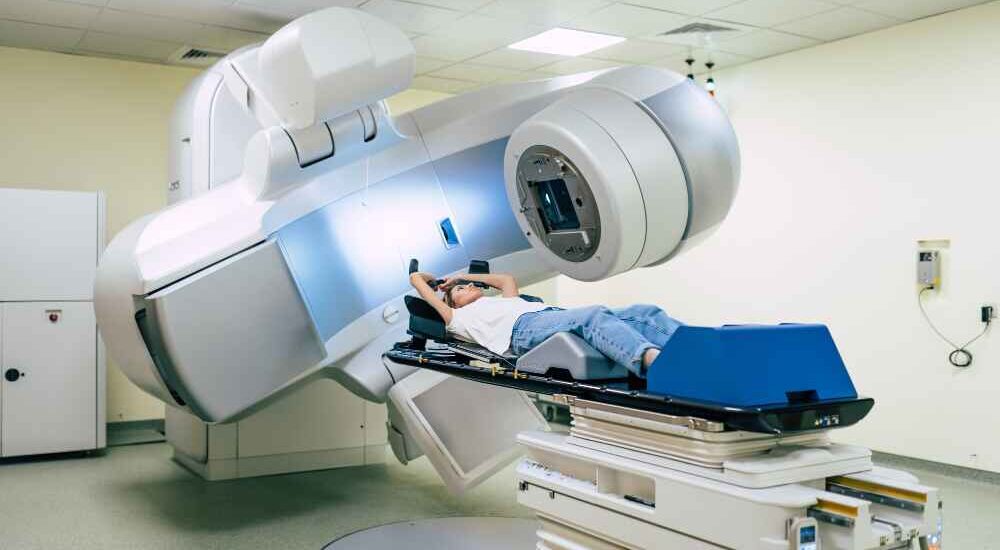
Radiation oncology claims can be rejected, denied, or underpaid when services are billed under the wrong entity or with inappropriate component modifiers. The separation is actually considered an important control when it comes to billing since it determines the entity to be billed, the modifier, and the payment rate. Therefore, the key to effective radiation billing lies in understanding both components. An expert oncology billing services team is built to address these.
Understanding Professional and Technical Components
The professional component includes the services of the physician. For instance, treatment planning, imaging review, dose review, and management of the treatment process. On the other hand, the technical component includes the linear accelerator, overhead costs, therapists, dosimetrists, physicists, and supplies that are needed for the treatment process.
If a single entity like the freestanding clinic owns the equipment and even employs the oncologist, then the claim will be submitted without any modifier. These will generally fall under global billing. However, when they are separated, the modifier 26 will refer to the professional part, and modifier TC to the technical one.
How the Billing Setting Changes the Claim
Radiation oncology center stands alone as an office for billing purposes. And it normally sends claims as global charges in CMS-1500 format. In case of a hospital outpatient department, the hospital would bill technical services through an institutional claim that is reimbursed under Outpatient Prospective Payment System.
The physician under the contract would send professional services under Physician Fee Schedule using modifier 26, place of service 19/22. The Medicare only pays the technical component under the fee schedule when the beneficiary is not a hospital patient. An expert oncology billing services partner understands these requirements well.
Related Reading: How Oncology Medical Billing Companies Improve Provider Collections
Fee Schedule Indicators and Code Families
Each code is assigned an individual PC/TC indicator that indicates if it is appropriate to break out components. Codes that have the indicator 1 can be globally, professionally, or technically billed; indicator 2 refers to professional only, and indicator 3 is a technical only service. Checking the indicator and relative value units associated with each code will prevent unnecessary errors when assigning modifiers.
Professional only codes include 77427, reported per five fractions and stereotactic management, codes 77432 and 77435 which never need a modifier for breaking out the component. Technical only codes include 77336 and 77370 for radiation physics services and 77407 and 77412 for external beam radiation treatment delivery tiers. Many codes for planning and dosimetry are either global or separate billing according to the site of service.
Image guidance is dealt with separately because the technical component is included in the code for the procedure, and only 77387 can be billed. Individual payers may require the use of a particular modifier, therefore payer guidelines need to be verified prior to billing.
Documentation and Treatment Management Requirements
Professional claims rely on documents such as the treatment plan, prescriptions, dosing limitations, image interpretation notes, and weekly management encounters. Claims generally require proper treatment documentation, accurate fraction count, prior authorization, and ICD-10-CM diagnostic codes for medical necessity. Denials of prior authorizations for CPT codes 77412 and 77387-26 have also been reported by ASTRO during early 2026. Hence, tracking prior authorizations is crucial.
Code 77427 can be charged only once in five fractions. And there should be at least three fractions for the billing of the last unit. One or two remaining fractions cannot be charged. This is because individual units since code 77431 is used for only one or two fraction treatments in full. Stereotactic treatments use codes 77432 or 77435 for management only. Neither of these codes can be applied to stereotactic radiation therapy or brachytherapy management.
Common Errors and Compliance Risks in Oncology Billing Services
Using modifier 26 for the billing of global services makes the reimbursement to be the professional component only. However, the technical component is always significantly greater than the professional one. Another common mistake is using TC for the billing of hospital services, freestanding technical services for inpatients of hospitals, and so on.
The use of dedicated oncology billing services decreases such mistakes through charge entry edits, modifier checks, payer policies monitoring, and fraction counting.
Related Reading: The True Need for Oncology Billing Companies: A Critical Study
Fix Your Oncology Revenue Cycle With SunKnowledge
The accurate segregation of technical and professional aspects is required to ensure the billing process is compliant and predictable in freestanding radiation oncology centers. SunKnowledge provides complete oncology billing services that include radiation billing, oncology prior authorization, and radiation physics and dosimetry coding services. Our company has 97% first-pass acceptance rate and over 17 years of experience working with healthcare providers across the nation.
SunKnowledge also assists practices with their 90+ days outstanding accounts; the major cause of uncollected revenue in radiation oncology practices. In addition, we can help our clients cut down denial rates by 30%. Our account managers and coders will protect revenue, maintain compliance, and keep an eye on every claim in accordance with payers’ requirements.
Schedule your free consultation and get your radiation oncology billing processes analyzed by us now.
FAQ
How does global billing differ from professional billing and technical billing in radiation oncology?
Global billing combines the two parts and is utilized when one entity has the machine and employs the doctor. Split billing separates the physician’s modifier 26 claim from the technical bill of the hospital outpatient units.
How do oncology billing services help avoid denials related to the component billing?
An established vendor verifies the entity which owns the equipment and where the radiation services have been performed before requiring modifiers.
Does modifier 26 or TC apply to the code 77427?
No. Code 77427 is a professional code, and no component modifiers are applicable codes that do not permit PC/TC separation. However, billing staff need to double-check with specific payers as sometimes the commercial plans are different from Medicare guidelines.
How quickly should an urgent care clinic submit charges to evade revenue delays?
Positively within 1-2 days of the encounter.